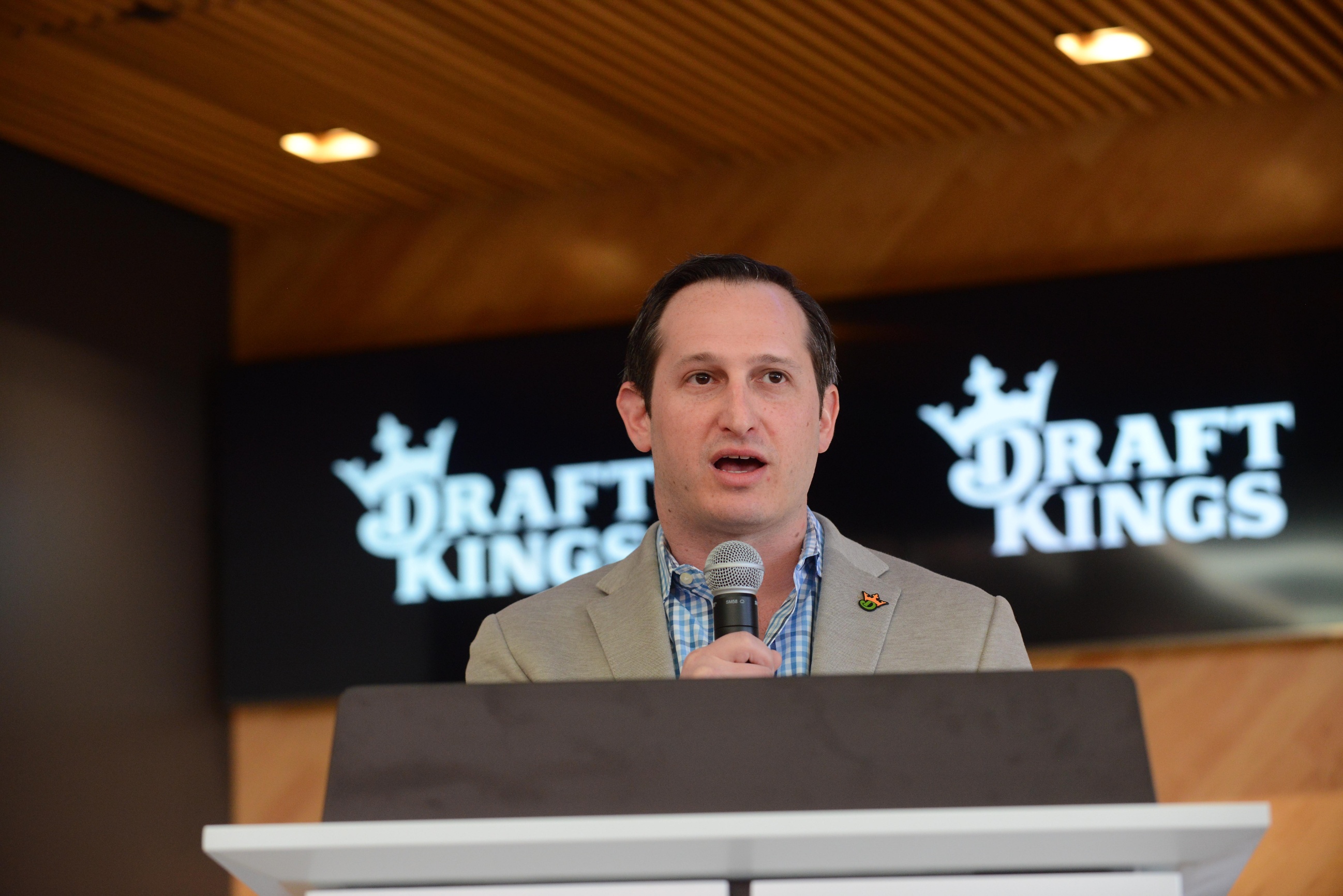
DraftKings' Promotional AI Scored Bettors by Addiction Markers, NYT Investigation Finds
The machine-learning model DraftKings built in 2023 did exactly what its designers intended: it scanned a user's playing frequency, daily account balance patterns, and the ratio of their losses to total wagers, then assigned each casino player an internal score predicting how much money they would lose after receiving a free bet or bonus offer. The higher that score, the more a promotional dollar invested in that customer was worth to DraftKings. A New York Times investigation published September 19, 2026 — based on internal memos, presentations, betting records, and interviews with more than 40 former employees — found that the company named this number the "elasticity" score and used it to direct hundreds of millions of dollars in promotional spending at the users its own algorithm identified as the most profitable targets.
What that score was actually measuring, a former data analyst who built it told the Times, was the profile of a problem gambler.
"We are looking for traits and features that we can target that indicate a good investment," said Jayden Butts, a former DraftKings data analyst who tested the system on thousands of casino players. "The best investment would be a problem gambler." A second unnamed former analyst described the approach to the Times more bluntly: "It is as predatory as it sounds."
The investigation arrives as the National Council on Problem Gambling reports that more than 31,000 Americans contact its helpline every month — a figure it characterized as reflecting contacts that are "younger, more diverse, and facing new gambling risks." Separately, the 2026 American Sport Fanship Survey found that online sports bettors are chasing losses at a record loss-chasing rate — 60% report doing so, up from 52% in 2025 — and that 26% say gambling losses are causing them financial problems, also a record.
How the Elasticity Score Works — and Why It Finds Problem Gamblers
To understand why DraftKings' promotional targeting model is the same, architecturally, as a harm-detection model, it helps to understand what the training objective selects for.
The elasticity model was trained on a labeled dataset of past bettors: users who had received a promotion, followed by a measurement of how much they subsequently lost. Its goal was to identify features in the behavioral record that predicted the highest post-promotion losses. The features it was given — playing frequency, daily account balance ratios, and the ratio of losses to total wagers — are precisely the behavioral markers used in a clinical AI gambling prediction study to identify disordered gambling. High loss-to-wager ratios mean a gambler consistently loses but keeps playing; depleted daily balances indicate an inability to stop; elevated playing frequency indicates compulsive re-engagement. A model trained to maximize predicted post-promotion losses necessarily learns to rank users by how closely their behavior resembles these clinical markers — not because it was designed to find problem gamblers, but because problem gamblers are, by definition, the users most likely to continue losing after a promotional prompt.
DraftKings used this infrastructure to distribute approximately $400 million in AI-automated promotions in 2025 alone, a figure disclosed at its Investor Day in March 2026. Company executives credited AI targeting with improving promotion-driven sportsbook margins by 13% in 2025.
What DraftKings Could Have Built Instead
Perhaps the most consequential element of the investigation is not the targeting system itself, but what it crowded out.
According to former employees who spoke with the Times, a data scientist named Nestor Hernandez began developing a separate model in 2024, one designed to identify customers whose behavioral data indicated they were sliding toward a gambling crisis. The infrastructure to power such a model already existed; it was, according to people familiar with the work, the same data pipeline feeding the promotional targeting system. DraftKings shelved the project.
Chief Responsible Gaming Officer Lori Kalani explained the decision to the Times: company leaders had reached a "collective decision" against building predictive risk tools because the approach was deemed not "evidence-based." The company separately integrated the Mindway AI Gamalyze tool — a simulated card game from vendor Mindway AI — into its Responsible Gaming Center as an alternative diagnostic mechanism. Former employees told the Times that the abandonment of Hernandez's model left the internal data infrastructure directed in only one direction: toward maximizing promotional return, not toward flagging users in distress.
DraftKings Disputes the Account
DraftKings told the Times that its promotional offers go to customers who show "sustained, engaged use" of the platform, not to users selected because of their losses, and called Butts's analysis "preliminary and inconclusive." The company also described its responsible gaming program as comprehensive: it offers deposit limits, time limits, self-exclusion options, and monitors more than two dozen behavioral indicators it says can trigger responsible-gaming outreach, messages, or, in some cases, account closure.
DraftKings CEO Jason Robins told Fortune in 2024 that the company does not use AI "in that way" when asked whether AI could be used to identify and exploit addictive behaviors, according to a Fortune interview published April 2024. He added that people with gambling problems "are going to have a gambling issue" regardless of platform design, and that the company's responsibility is to ensure those individuals are identified and offered help. Robins's comments were made before the NYT investigation was published and before the existence of the elasticity model was documented in reporting.
Critics argue DraftKings' stated protective measures — a simulated card game diagnostic, opt-in spending limits — are outgunned by the precision of the targeting infrastructure on the other side of the same data pipeline.
DraftKings' Scale, and Why the Targeting Gap Matters
The financial scale of DraftKings' operations explains why even small efficiency gains in promotional targeting represent enormous sums extracted from users. The company collected approximately $8.7 billion in gross gambling revenue in 2025 while distributing roughly $3 billion in promotions, according to Citizens Bank research cited by the Times. One book by a gambling industry consultant who researched DraftKings, published in 2026, claimed that AI controls 70% of the company's promotional spending decisions, and that internal analytics showed 42% of DraftKings revenue came from just 3.8% of its user base, according to a CasinoBeats interview with author Robert Walker.
The NCPG 2024 gambling survey estimated that roughly 8% of American adults — approximately 20 million people — showed at least one indicator of problematic gambling behavior. Problem gambling indicators rose sharply after nationwide sports betting legalization began in 2018, peaking at 11% in 2021 before partially subsiding to the current 8% figure — still above the 7% pre-legalization baseline. A separate 2026 survey found that 27% of Americans now hold an active online sports betting account.
A Regulatory Reckoning Taking Shape
The NYT investigation arrives as Congress and multiple state legislatures are moving — at different speeds — toward AI-specific restrictions on sports betting promotional practices.
Sen. Richard Blumenthal of Connecticut and Rep. Paul Tonko of New York introduced the SAFE Bet Act, which would prohibit sportsbooks from using AI to track individual betting habits, generate personalized promotional offers, or develop AI-driven betting products, according to a legislative summary from Global Policy Watch. The bill would also require affordability checks before large wagers, cap customer deposits to five per 24-hour period, and ban advertising during live sporting events. As of September 2026, the bill remained pending in Congress with unclear prospects, according to a sports betting AI legislation tracker.
Illinois, New York, and Oklahoma have introduced parallel state-level bills targeting AI personalization in gambling; the Illinois and Oklahoma bills stalled in 2025. A Senate Commerce subcommittee hearing on sports betting in May 2026 heard testimony from the NCPG calling for comprehensive public health solutions, according to the NCPG Senate Commerce testimony.
The industry has responded to the regulatory push with its wallet. DraftKings roughly doubled its federal lobbying expenditures to approximately $900,000 in 2025, while FanDuel spent $1.1 million — a more than sevenfold increase from 2024, according to OpenSecrets lobbying analysis. DraftKings and FanDuel also jointly contributed to Win for America, a super PAC that raised $41 million from the two operators and Fanatics Sportsbook ahead of the 2026 elections, according to a PYMNTS report on FEC filings.
The American Gaming Association, the industry's primary trade group, has opposed federal oversight proposals, arguing that state-regulated markets already impose significant compliance requirements and that legal sportsbooks provide a safer alternative to illegal offshore betting sites.
What Happened in Baltimore
DraftKings' practices have drawn legal challenges beyond federal legislation. The City of Baltimore, represented by Mayor Brandon Scott and the city council, filed a lawsuit against DraftKings and Flutter Entertainment (FanDuel's parent) in April 2025, alleging the companies violated Baltimore's Consumer Protection Ordinance by using sophisticated analytics to identify users with gambling disorders and then directing maximally exploitative promotions at them, according to the DiCello Levitt complaint announcement. The complaint alleged that Flutter's subsidiary had collected at least 186 attributes per bettor, including "propensity to gamble and susceptibility to marketing," according to ESPN coverage of the lawsuit. The lawsuit further noted that Flutter implemented financial vulnerability checks and VIP program restrictions in the United Kingdom that it declined to extend to US operations.
University of Maryland research cited in the lawsuit found that 20.8% of online sports bettors showed signs of disordered gambling, compared with 11.3% of in-person bettors — a finding consistent with the hypothesis that algorithmic engagement design and 24-hour smartphone access intensify problem gambling beyond baseline rates.
The practices, the lawsuit noted, were sufficiently well-known among professional bettors that some had "learned to mimic the behavior of problem gamblers" in order to qualify for the same promotional offers and maintain higher betting limits.
What Bettors Should Know
The investigative findings point toward several practical conclusions for users of sports betting platforms.
Free bet offers and bonus bets are not randomly distributed consumer perks. When DraftKings or similar platforms send a re-engagement promotional offer, particularly after a period of inactivity or following a significant loss, that offer is the output of a targeting model — one that, according to the NYT investigation, may have assigned the recipient a high score for expected future losses. A promotion felt as generosity may be a prediction of susceptibility.
Self-imposed limits — deposit caps, time limits, self-exclusion — exist on most major platforms and remain the most direct tool available to users. DraftKings' My Stat Sheet tool, which logged 13 million unique visits in its first year after launching in February 2024, allows users to review their full wagering history including net wins and losses. These tools are opt-in; the algorithmic targeting they exist alongside is not.
Frequently Asked Questions
How does DraftKings use AI to target bettors with promotions?
According to a September 2026 New York Times investigation, DraftKings built a machine-learning model in 2023 that analyzed each casino user's playing frequency, daily account balances, and loss-to-wager ratio to generate a numerical "elasticity" score. A higher score indicated that a given user was expected to lose more money following a promotional offer. DraftKings then directed its promotional spending — approximately $400 million in AI-automated promotions in 2025 — toward users with the highest scores. DraftKings disputes that the system targets users because of losses, saying it focuses on customers who demonstrate sustained engagement with the platform.
Is DraftKings targeting problem gamblers specifically?
Former DraftKings data analyst Jayden Butts, who tested the elasticity system on thousands of casino players, told the Times that the model's logic led directly to that conclusion: "The best investment would be a problem gambler." Because the model trains on post-promotion losses, and because compulsive behavioral patterns — loss-chasing, escalating deposits, high playing frequency — predict the highest future losses, the scoring system effectively learns to identify problem-gambling markers even without explicitly encoding them. A separate harm-detection model that could have flagged at-risk users was built on the same infrastructure but shelved by DraftKings leadership.
What does the SAFE Bet Act do to sports betting AI?
The SAFE Bet Act, introduced in September 2024 by Sen. Richard Blumenthal and Rep. Paul Tonko, would prohibit sportsbooks from using AI to track individual customers' gambling habits, generate personalized promotional offers, or develop AI-driven betting products like algorithmically priced live microbets. States wishing to offer sports betting would need to obtain Justice Department approval demonstrating compliance with these federal minimums. The bill remained pending in Congress as of September 2026, with unclear prospects for passage.
How can I protect myself from algorithmic targeting by gambling platforms?
The most effective tools are the platform's own opt-in limits: deposit caps, time limits, and self-exclusion options available through DraftKings' Responsible Gaming Center and similar sections on other sportsbook apps. Setting these limits proactively — rather than after receiving a promotional offer — removes some of the leverage that re-engagement targeting relies on. Reviewing your account's net loss history (available through DraftKings' My Stat Sheet tool) can also provide perspective on how promotional offers affect your overall spending pattern. If you or someone you know is struggling with problem gambling, the National Problem Gambling Helpline is available 24 hours a day, seven days a week, at 1-800-MY-RESET (1-800-697-3738).
ⓒ 2026 TECHTIMES.com All rights reserved. Do not reproduce without permission.
Source: original · archived on viral-news.eu